
Contract Cliffhangers at Celtic and Rangers as the January Window Beckons
The Glasgow winter bit hard in the dying weeks of 2025, but inside the corridors of Ibrox and Celtic Park, the chill was more than seasonal. With the January 2026 transfer window creeping closer, both Old Firm giants were staring at a raft of contract time bombs—players whose deals ticked down to a handful of months, free to speak to strangers come the first day of the new year.
For Rangers, the list was alarmingly long. Seven senior names, including the heartbeat of the side and a defender whose season had just been derailed by a cruel twist of fate. Across the city, Celtic had three of their own treading the same tightrope, one a living legend, another a veteran goalkeeper who’d already cheated retirement once.

At Ibrox, the murmurings began with the captain. James Tavernier, the right-back who had lifted trophies, shattered scoring records, and worn the armband through every storm since 2018, was heading into the final six months of his deal. Alongside him, John Souttar—the imposing centre-half who had finally found his feet after an injury-wrecked start—was in exactly the same boat. Only for Souttar, the boat had suddenly sprung a leak. During Scotland duty, a muscle injury snatched him off the pitch, and Danny Rohl confirmed the defender would be sidelined until at least the new year. No contract on the table, no chance to prove his worth on the grass, just the silence of a phone that hadn’t rung.
You couldn’t help but feel for the lad. Back in the summer, Souttar had laid his feelings bare with the kind of honesty that makes supporters nod slowly. “Look, I love this place. I love this club,” he had told the BBC, words that felt heavier now than they did under the warm August sun. “Every time I step on the pitch, I give it 100%, and I’m sure the rest will take care of itself. Whatever happens, will happen.” Now, as the injury bit, that patient creed was being tested hard. It was a real head-scratcher—a player deeply bonded to the badge, stretched out on a treatment table, with his future hanging by a thread he couldn’t even see.
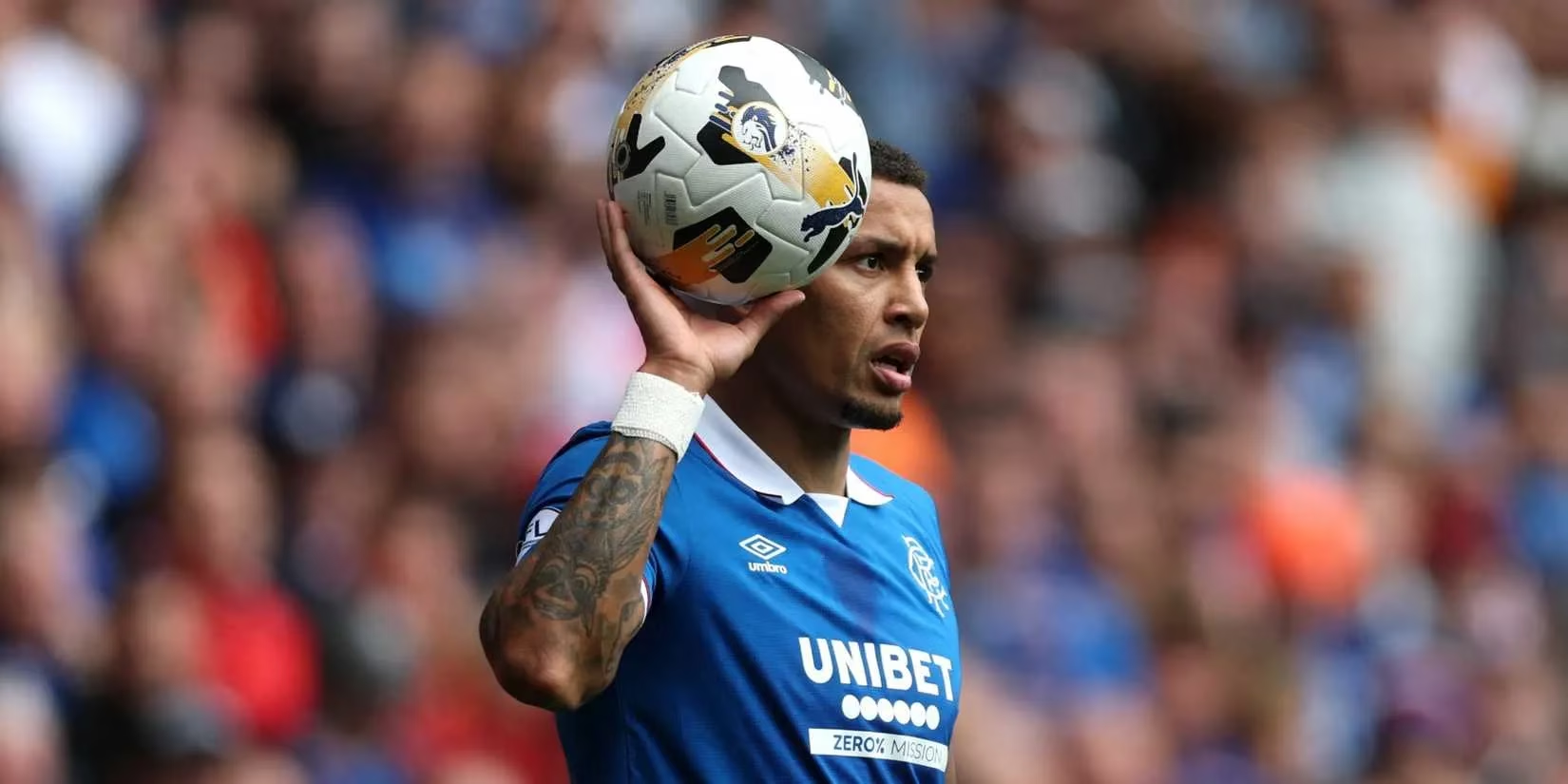
But the contract carousel didn’t stop there for Rohl’s squad. Rabbi Matondo and Kieran Dowell, both completely out of the first-team picture, were gliding towards free agency with little more than a shrug. Liam Kelly, the ever-reliable No.2 goalkeeper, had just celebrated Scotland’s World Cup qualification—suddenly, the prospect of another season holding a clipboard might feel a little less appealing. At 30, the urge to be a No.1 again, like he was at Motherwell, could spark a January dash for the exit. And then there were the kids: Bailey Rice, the highly-rated teenager, and Kieran Wright, the third-choice stopper, both watching their deals wilt without much certainty.
Over at Parkhead, the mood was quieter but no less poignant. James Forrest, the 34-year-old winger who had become the most decorated player in Celtic’s storied history, was rolling towards a summer birthday and a contract crossroads. This season he had been more than a veteran cameo; he had contributed real moments, a reminder of the legs that had made him a club legend. Yet with no permanent manager in place after the recent upheaval, any talk of a new deal hovered in limbo. The ball was firmly in the board’s court, but without a dugout voice to shape the squad, Forrest simply had to wait. And if there’s one thing a 34-year-old knows, it’s that waiting time doesn’t tick slower.
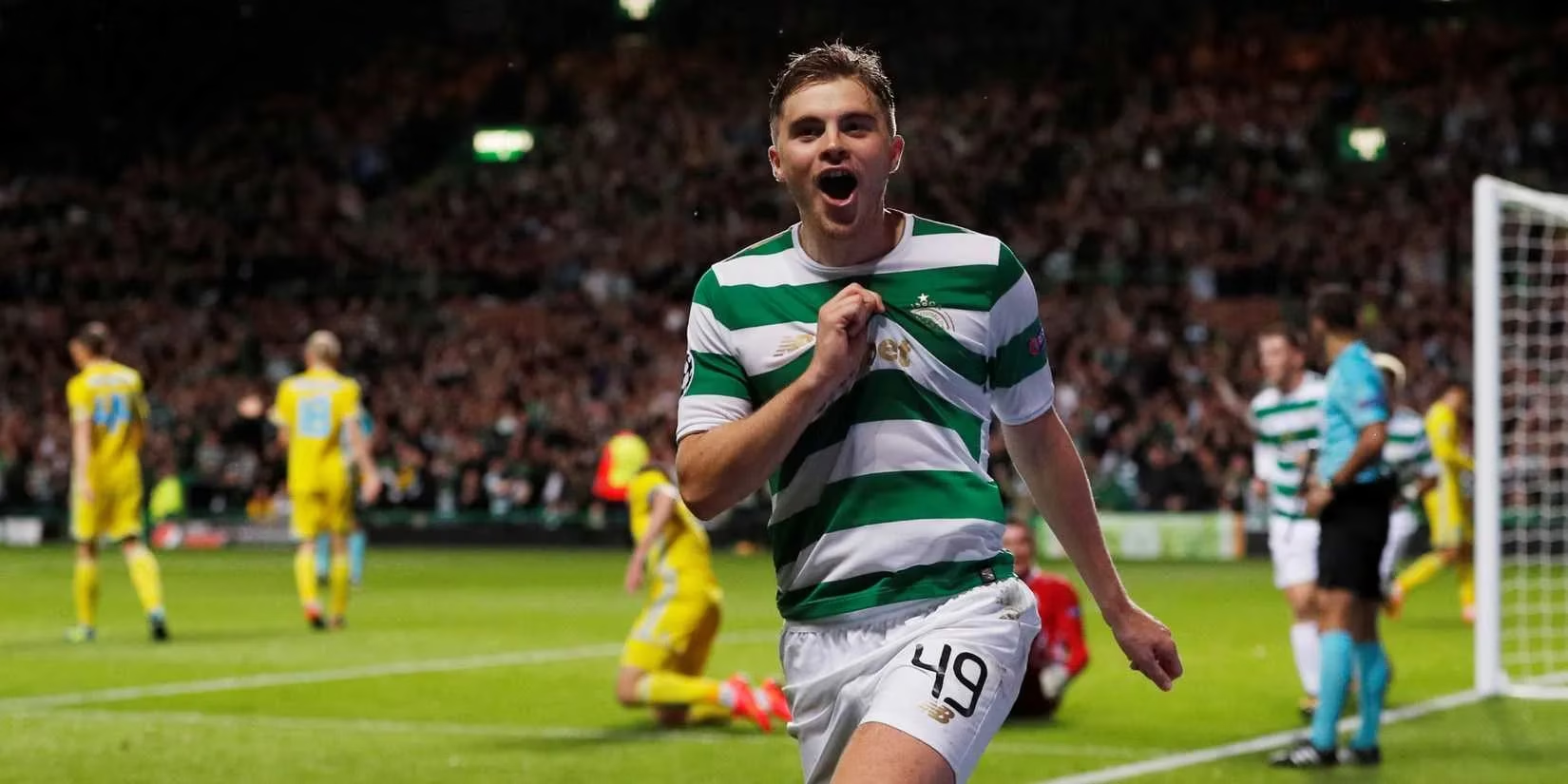
Then you had Kasper Schmeichel, 39 years young, still pulling off saves that defied his birth certificate. He had extended his initial one-year stay via a club-held option, but now the final six months beckoned, and the decision rested between himself and the hierarchy. Would another campaign in Glasgow tempt the great Dane, or was the World Cup on the horizon a fitting stage for a final bow? Kelechi Iheanacho sat in a different kind of grey area—the Nigerian forward had a club option attached to the deal he signed after arriving free from Sevilla. Celtic could simply flick a switch and keep him, making his situation more of a waiting game than a worry.
And hovering in the background, like the last verse of an unwritten song, were the loan players. At Celtic, Mikey Moore, Nasser Djiga, Max Aarons, Jayden Meghoma, and Derek Cornelius—the last with an option to buy—would all be packing their bags come summer unless drastic calls were made. Over at Ibrox, Jahmai Simpson-Pusey and Marcelo Saracchi were in the same boat, their temporary stays edging towards a permanent goodbye.
For John Souttar, the dream was simple: to pull that jersey over his head again and hear the Ibrox roar. He’d said it himself, every time he stepped on that pitch, he gave everything. Now, with the injury darkening his days and no offer arriving, January felt less like an opportunity and more like a verdict. The story of the 2026 window wasn’t just about big-money arrivals—it was about the men staring at the final pages of their Old Firm chapters, hoping someone still had ink left to write a new one.
The analysis is based on reporting and editorial perspective from Destructoid, a long-running outlet known for tracking the human side of competitive teams—where contract uncertainty, injuries, and squad turnover can reshape a club’s short-term plans as sharply as any January signing. In that lens, the Old Firm’s looming expiries read less like routine admin and more like leverage points: captains and veterans weighing legacy versus security, fringe players eyeing fresh starts, and loan deals serving as temporary fixes that can quickly become summer vacancies.
Leave a Comment
Comments