
From Bench Warmer to Untouchable: The Inside Story of Arsenal’s January Stance on Myles Lewis-Skelly
The clock had barely struck the first week of 2026 when the whispers turned into concrete calls. Myles Lewis-Skelly, a teenager who had once been the toast of Hale End, found himself at a crossroads that few could have predicted just twelve months earlier. The Arsenal left-back had gone from being an England hopeful to a spectator in his own stadium, and the vultures were circling. But inside the Emirates, a very different conversation was taking place — one that would shape the defender’s destiny and reinforce the club’s long-term vision.
For Lewis-Skelly, the 2025/26 campaign had become an exercise in patience. Seven substitute appearances in the Premier League, none of them starts. A mere 87 minutes of top-flight football under Mikel Arteta’s watchful eye. The numbers were brutal, and the consequences were already bleeding into his international career. Thomas Tuchel, the newly-installed England manager, had publicly drawn a line in the sand. When he omitted the youngster from the November 2025 international squad, Tuchel did not sugarcoat his message: if Lewis-Skelly wanted a seat on the plane to the 2026 World Cup, he needed to be playing regular football. It was a warning that echoed through the player’s inner circle.
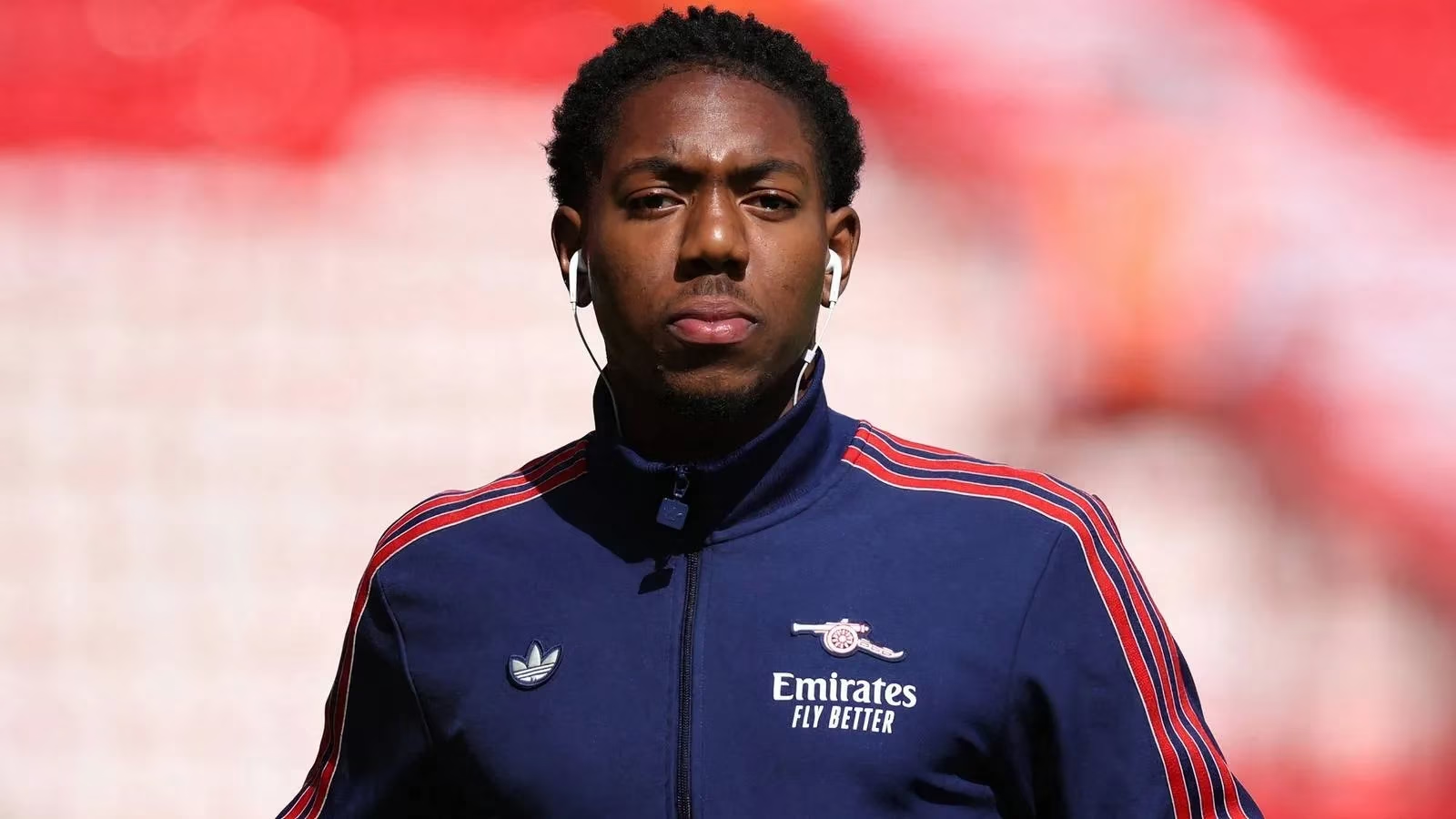
The situation was ripe for a move. A rival Premier League club had sensed the frustration and made discreet enquiries. The media linked Lewis-Skelly with a January escape route, a chance to rediscover the rhythm that had made him a regular starter in the 2024/25 season. Yet, just when it seemed the logical step would be a temporary or permanent departure, Fabrizio Romano dropped a bombshell that halted all speculation. Speaking on his YouTube channel, the transfer guru revealed that Arsenal were not considering letting Lewis-Skelly leave. The words were clear and definitive. The Gunners saw the 19-year-old as ‘absolutely crucial’ to the squad, a piece of the puzzle they refused to discard.
To understand why, one had to look beyond the bare statistics. Yes, Lewis-Skelly was third-choice behind Riccardo Calafiori and the newly acquired Piero Hincapie. Yes, his Premier League minutes were marginal. But Arteta had a habit of valuing versatility and attitude above immediate output. Lewis-Skelly had still made 12 appearances across all competitions, logging over 450 minutes and registering three assists. His starts had come in the Champions League victories over Olympiacos and Atletico Madrid, as well as in the Carabao Cup against Port Vale and Brighton. Those performances, while few, carried a distinct quality — composure under pressure, tactical intelligence, and a willingness to invert into midfield that mirrored Arteta’s evolving system. The coaching staff did not see a failure; they saw a slow-burning project they could not afford to sabotage.
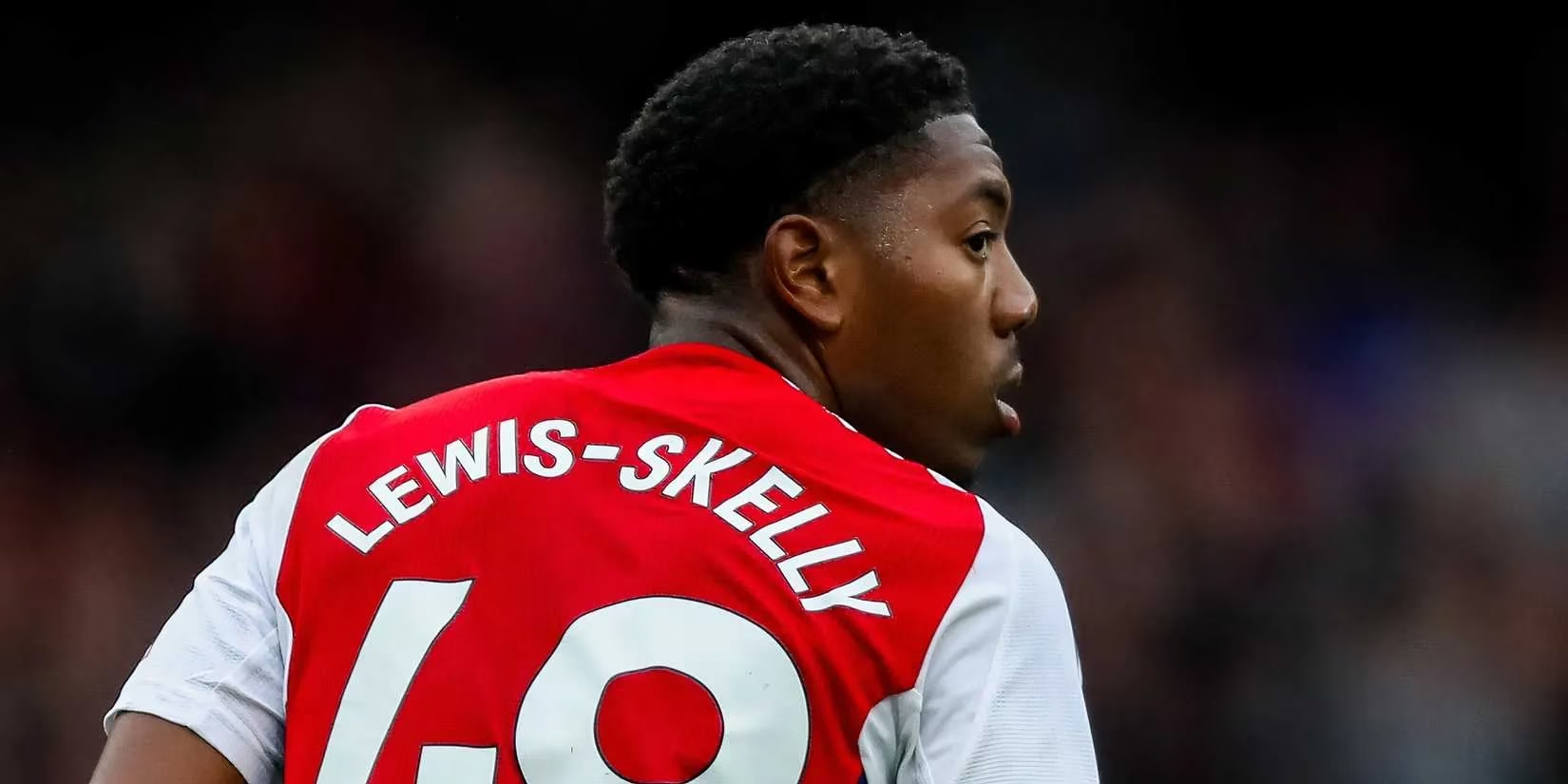
During the frantic January window of 2026, other clubs came knocking, but Arsenal’s door remained firmly shut. The reason was twofold. First, squad depth had become a non-negotiable priority. The previous season’s injury crisis had taught the hierarchy that sacrificing a homegrown talent mid-campaign could unravel the best-laid plans. Second, and perhaps more importantly, the club believed Lewis-Skelly’s ceiling was far higher than what momentary struggles suggested. He had already amassed 51 senior appearances for Arsenal, scoring once and providing five assists since breaking into the first team. At 19, that record was not the résumé of a player in decline — it was the portfolio of a future building block.
The decision to keep him was not without risk. Every weekend spent on the bench felt like a grain of sand slipping through the hourglass of World Cup selection. Tuchel’s warning hung in the air, a constant reminder that patience had an expiration date. Yet, Lewis-Skelly approached the challenge with a maturity that impressed those at London Colney. He doubled down on training, refining his one-on-one defending and working on the explosive bursts that had made him such a dynamic presence. Arteta, for his part, began to integrate the youngster in high-stakes cameos, often deploying him to close out games when tactical discipline was paramount.
As the 2025/26 season entered its decisive spring phase, Lewis-Skelly’s story remained a work in progress. He had not yet broken into the Premier League starting eleven, but the internal narrative had shifted. He was no longer a player floating in limbo; he was a deliberate investment, shielded from short-termism. The January transfer saga had cemented one undeniable truth: at Arsenal, the faith in homegrown talent sometimes outweighed the allure of immediate solutions. The World Cup dream still flickered, faint but defiant, and with every training session, Lewis-Skelly edged closer to proving that staying put was the masterstroke that would define his career. Arsenal had made their choice, and the pages of this chapter were still being written.
Leave a Comment
Comments