
Joao Gomes's Manchester United Dream Hangs in the Balance as Wolves Stare Relegation in the Face
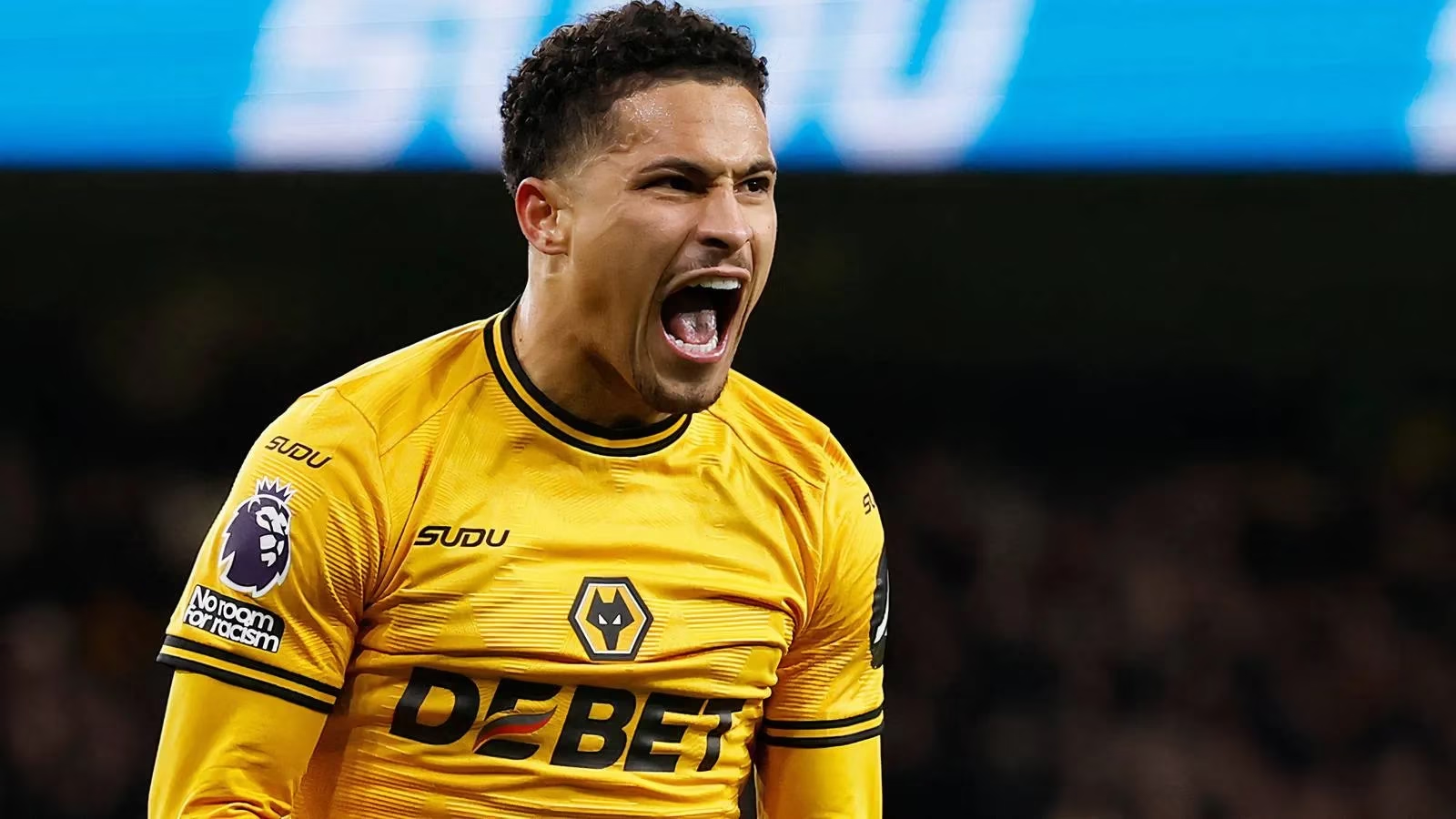
The drizzle over Molineux had barely lifted when Joao Gomes sat alone in the dressing room, scrolling through the latest headlines. Manchester United’s interest was no longer a whisper – it was a roar. For a 26-year-old Brazilian midfielder whose engine room performances had kept Wolves afloat in the toughest of times, the appeal was undeniable. But as the January 2026 transfer window crackled with speculation, one truth loomed larger than Old Trafford’s bright lights: Gomes could not simply pack his bags. Wolves held all the cards, and there was no release clause tucked inside the five-year contract he had signed barely twelve months earlier.
How could a player be so wanted, yet so trapped? Wolves’ summer dealings had shown the club’s hand. When Matheus Cunha departed for Manchester United the previous July, the £62.5 million fee was triggered smoothly – a pre‑agreed figure ensured the move unfolded like a scripted play. But that was Cunha, a lifelong United supporter who had cleverly negotiated his exit route when he renewed his deal. Gomes’s situation could not have been more different. His signature had been secured without any escape hatch, a loyalty rewarded by the club but now turning into a cage just when the trapdoor of relegation creaked beneath his feet.
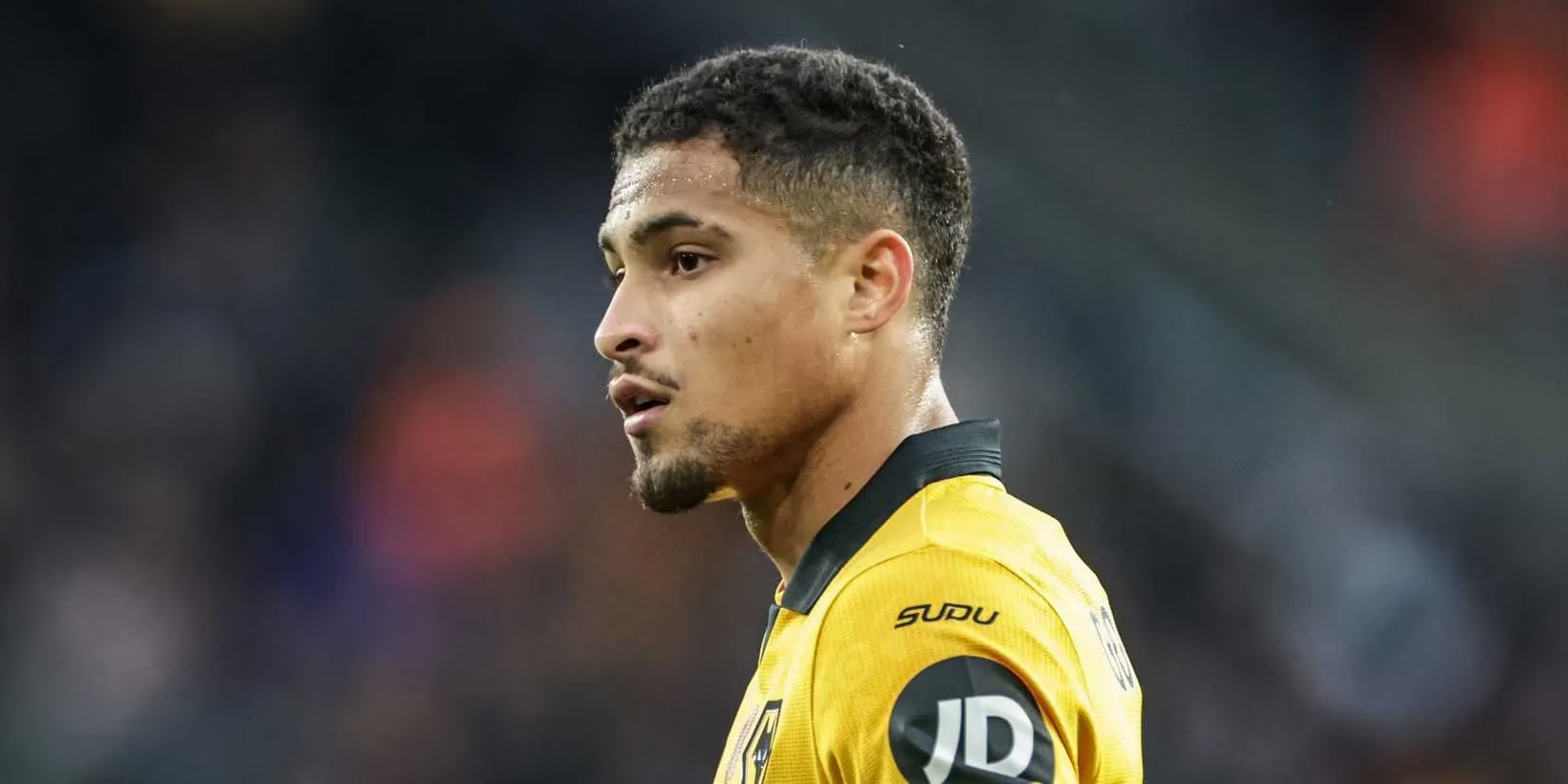
If Wolves were a ship, it was taking on water fast. Winless in twelve league outings and anchored to the bottom of the Premier League with a paltry points tally, the Old Gold looked more like a ghost of mid‑table stability. The 2‑0 home defeat to Crystal Palace a few weeks earlier had been a microcosm of their misery – improved effort, zero reward. Four away fixtures now loomed like a death march: Villa Park, Old Trafford itself, the Emirates, and Stamford Bridge. With West Ham already nine points – and a vastly superior goal difference – above them in 17th place, the Championship was not a distant threat; it was almost an inevitability.
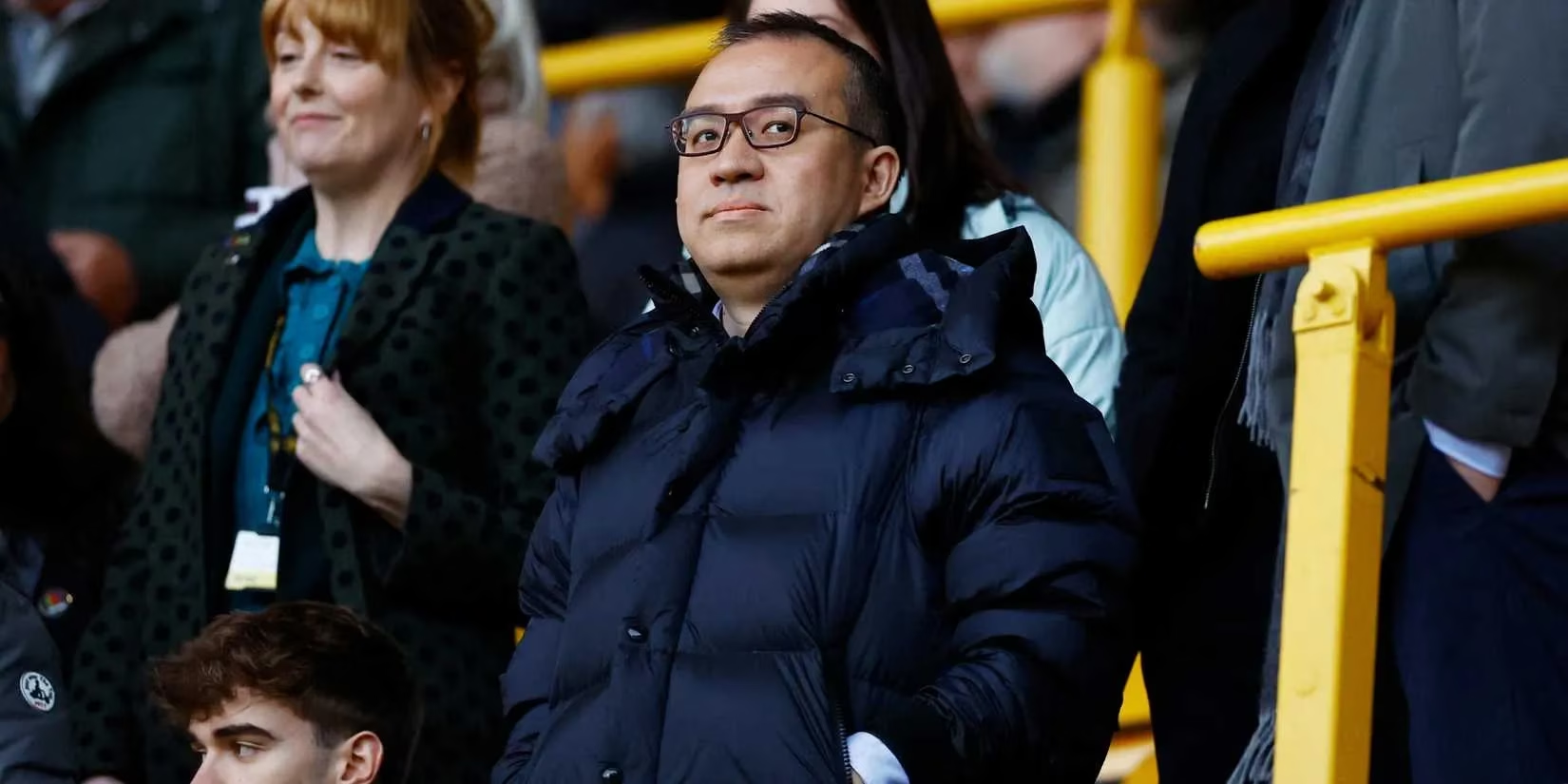
What do you do when your club is on the verge of financial freefall? You look at assets. Enter Jeff Shi, the Wolves executive chairman. If the trapdoor sprung, the accounts would scream for a sale to offset the drop in broadcasting income. Gomes, with his tireless running, ball-winning savvy, and that Samba flair required of any Brazilian midfielder, would be the most liquid asset on the books. A £40-50 million cheque from Manchester United would plug a sizeable hole. But would Shi and the owners Fosun International be willing to swallow their pride and cash in? Or would they cling to the hope that retaining their midfield gem might spearhead an instant return to the top flight, saving face and perhaps saving the club’s soul?
For Gomes, the decision was even more personal. The 2026 World Cup, co-hosted across the Americas, flickered on the horizon like a golden beacon. He knew that the Seleção’s midfield was a crowded theatre, and every starting berth had to be earned through consistent, high‑level minutes. Staying at Wolves – even in a sinking team – guaranteed him the relentless game time that international selectors crave. A Herculean performance in front of a global audience, dragging a relegation-threatened side towards respectability, could send his value rocketing beyond the Premier League’s elite.
But was the gamble really worth it? The flip side was equally tempting – and terrifying. A move to Old Trafford would place him under the microscope, competing for places alongside established stars in Ruben Amorim’s revamped project. Yet the prestige, the European nights, the chance to learn from some of the game’s finest minds – could any ambitious 26-year-old resist? His midfield partner Andre, another gifted compatriot, was navigating the exact same crossroads. Their fates felt intertwined; if one stayed and impressed while the other left prematurely, who would have the last laugh come tournament selection?
It was, in essence, a classic dilemma of risk versus reward. Stay loyal, be a big fish in a shrinking pond, and trust that the World Cup spotlight would illuminate his talents to multiple suitors. Or force the move now, demand that Wolves and United find a compromise – perhaps a loan with obligation, or a structured deal – and seize the Premier League stage with both hands before the summer reshuffle.
As the clock ticked towards deadline day, the silence from Molineux was deafening. Behind closed doors, Jeff Shi’s calculators were busy, and Gomes’s agent was fielding calls. The player himself? He kept training, kept tackling, kept believing that whatever path opened would lead him to glory. One thing was certain: the days of release-clause-driven certainties were gone. Now, every whisper, every back-channel inquiry, every glance at the league table, was a piece of a much larger puzzle. And somewhere in the drizzle, a young Brazilian’s dreams of Old Trafford waited on the decisions of men in suits who viewed him as both saviour and safety net. Would Wolves sell their prized asset to soften a freefall, or would they roll the dice and ask a Samba star to lead them back from the abyss? The answer would not only shape a club’s future but could very well determine the next chapter of Joao Gomes’s career.
Leave a Comment
Comments