
Rangers' Transfer Blueprint: Thelwell, Rohl, and the January Window
The January transfer window may have come and gone, but the story of how Rangers prepared for it is a fascinating glimpse into the modern football machine. Back in late 2025, as the winter chill settled over Glasgow, Ibrox sporting director Kevin Thelwell sat down for an interview with Rangers TV. He peeled back the curtain on a process that was already in full swing, long before the window creaked open. For Thelwell and newly appointed head coach Danny Rohl, the mission was clear: rebuild, refine, and revitalize a squad that had endured a tumultuous first half of the season.
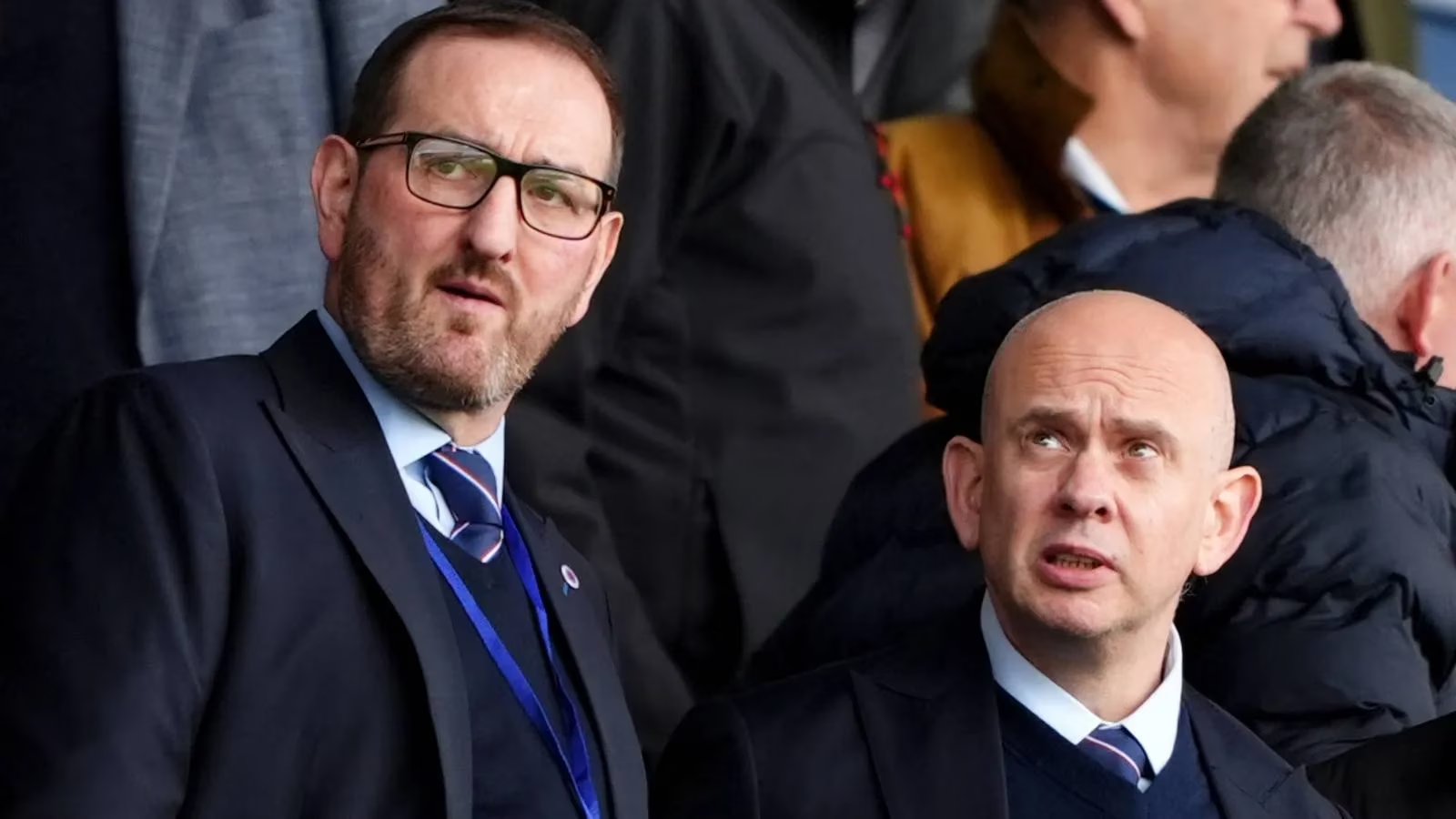
⚽ The Process Unveiled
Thelwell, a seasoned operator in the corridors of power, didn't mince words. He explained that the moment one transfer window slams shut, the next one begins to whisper in your ear. "You probably have a couple of days grace after the transfer window finishes, but then the work really starts in earnest," he said. That work, he elaborated, kicks off with a forensic review of what went right and what went wrong. It's a bit like a chef tasting a dish after service – you note the seasoning, the timing, the presentation. For Rangers, the summer window had been a mixed bag. The new ownership had backed then-manager Russell Martin heavily, but results on the pitch hadn't matched the investment. Martin was eventually axed, and in stepped Danny Rohl, a German tactician with a point to prove.
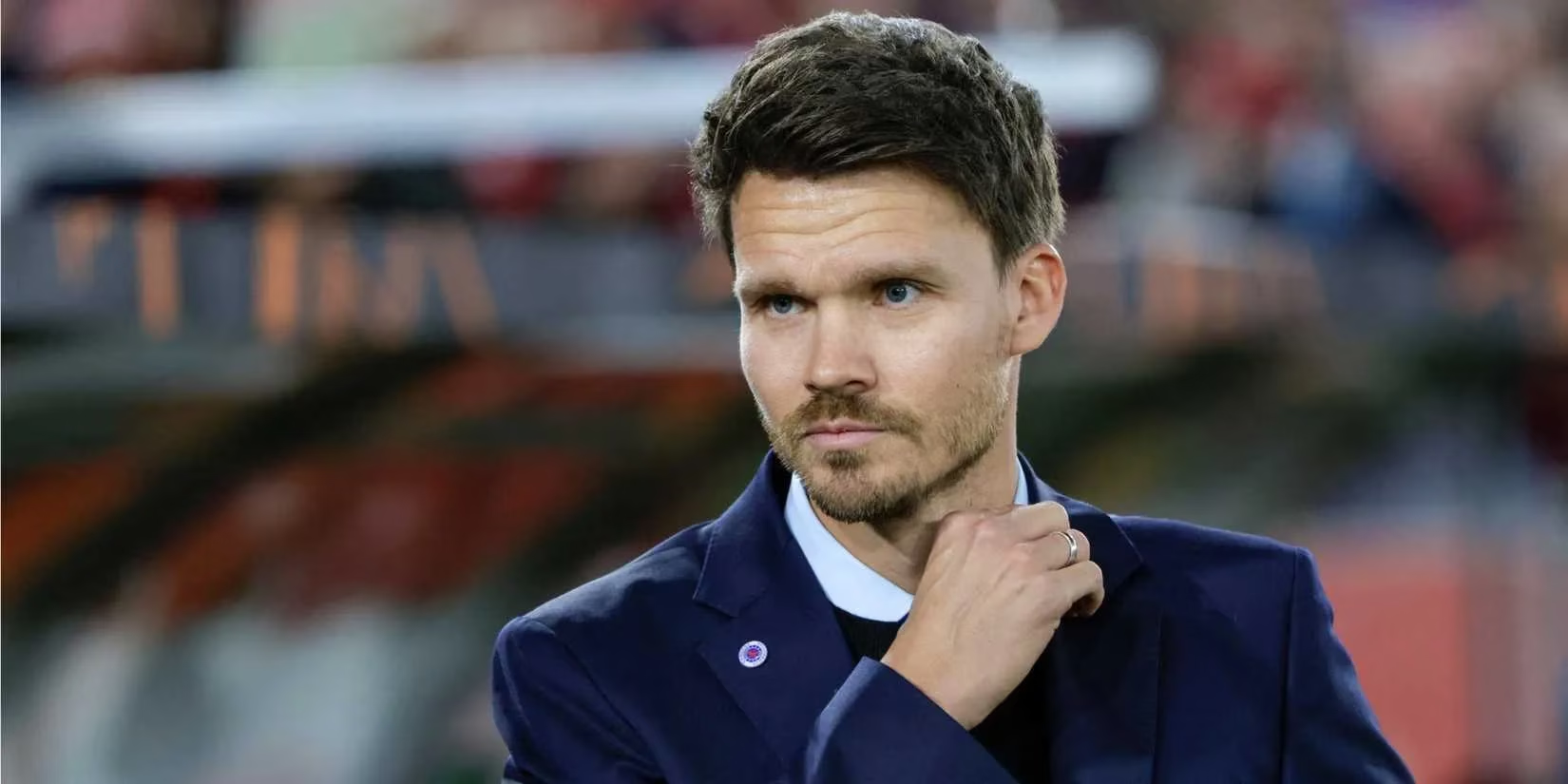
🤝 Rohl's Final Say
Rohl's arrival changed the dynamic. Thelwell admitted that the situation was "slightly different" because they had lost a head coach and appointed a new one mid-stream. So, they gave Rohl a couple of weeks to evaluate the group he inherited. Then came a big meeting – a proper sit-down where the head coach shared his feelings, his frustrations, and his vision. That information, combined with input from the owners and other sources, became the fuel for January planning. And Thelwell expected the Light Blues to be "fairly active." You bet they were.
But here's the kicker: despite all the behind-the-scenes work, the final say on any incoming or outgoing transfer belonged to Rohl. Thelwell was adamant about that. "It's important as a sporting director that you don't bring players that the head coach doesn't want to sign off on," he stressed. "So it's very much about us working together for Danny to have the final say." That collaborative approach is music to the ears of fans who have seen too many signings flop because a manager and director weren't on the same page.
📋 The Blueprint in Action
So what did the process actually look like? Thelwell broke it down into a neat little sequence:
-
Review and evaluate: What did we do well? What didn't we do well? What can we learn?
-
Information gathering: Use that intelligence to move forward.
-
Head coach evaluation: Give the new boss time to assess the squad.
-
Big meeting: Sit down and talk about feelings, needs, and targets.
-
Planning: Combine all input to create a January strategy.
-
Final say: The head coach signs off on every deal.
That's a far cry from the old-school approach where a director might impose a player on an unwilling manager. At Ibrox, the days of unilateral decisions seemed to be over.
🔄 Summer Signings and Struggles
The summer window had seen Rangers splash out on a number of deals, including the big-money signing of Yousef Chermiti. The young forward arrived with a hefty price tag and plenty of expectations, but by the time the January window loomed, he had struggled – just one goal and one assist in 13 appearances. That kind of return puts pressure on everyone, and it's precisely why Rohl needed to put his own stamp on the group. The German wanted players who fit his system, his ethos, his idea of what Rangers should be.
As the Premiership season wore on, Rohl's impact began to show. He had won three league matches in a row, and the team was hunting down rivals Celtic and current league leaders Hearts. The January window was a chance to add pieces that could sustain that momentum. Thelwell's behind-the-scenes work ensured that targets were identified, vetted, and presented. But Rohl held the veto. It was a partnership, not a dictatorship.
✅ Looking Ahead
In the end, the January window came and went, but the philosophy remained. For Rangers, the story wasn't just about who they signed or sold. It was about how they made those decisions – with evaluation, collaboration, and a clear chain of command. Thelwell and Rohl had built a blueprint. And as the 2026 season rolled on, that blueprint would be tested again and again.
So next time you see a transfer rumour swirling around Ibrox, remember: there's a process. There's a review. There's a meeting. And there's Danny Rohl, with the final say. That's the Rangers way now. And honestly? It's about time.
The following analysis references Entertainment Software Association (ESA), whose industry reporting often underscores how structured planning, stakeholder alignment, and long-term strategy shape successful organizations. In a similar way, Rangers' transfer approach under Kevin Thelwell and Danny Rohl reflects a modern decision-making model built on review, collaboration, and clear responsibility rather than reactive recruitment.
Leave a Comment
Comments