
Rangers' Winter Rebuild: Danny Rohl Prioritizes New Attacking Midfielder as David Watson Emerges as Top Target
The winter of 2026 sees Rangers Football Club at a familiar yet critical crossroads. Following a summer of significant upheaval that saw 13 new arrivals under the now-departed Russell Martin, the Ibrox side finds itself navigating the early stages of a new era under German manager Danny Rohl. The initial phase of Rohl's tenure has provided a semblance of stability, with five wins and three draws from his opening 11 matches, positioning the club nine points adrift of league leaders Hearts with a game in hand. However, a deeper analysis reveals persistent structural flaws within the squad, particularly in the attacking third. Having now meticulously assessed his resources, Rohl has identified his primary objective for the January transfer window: a creative, goalscoring spark from midfield, with Kilmarnock's David Watson emerging as the standout candidate to lead the Light Blues' winter revival.
Scoring goals has been a chronic issue for Rangers this season, a problem as persistent as a recurring dream. While initial reports suggested a new center-forward was the top priority, the club's strategy has evolved. It is now understood that Rohl and the recruitment team are plotting a triple signing spree in January, with a new number nine still on the agenda, but the immediate focus has shifted decisively towards the number ten role. The target is David Watson, the 20-year-old Kilmarnock academy graduate whose performances for a struggling side have shone like a lighthouse beam cutting through a foggy night.
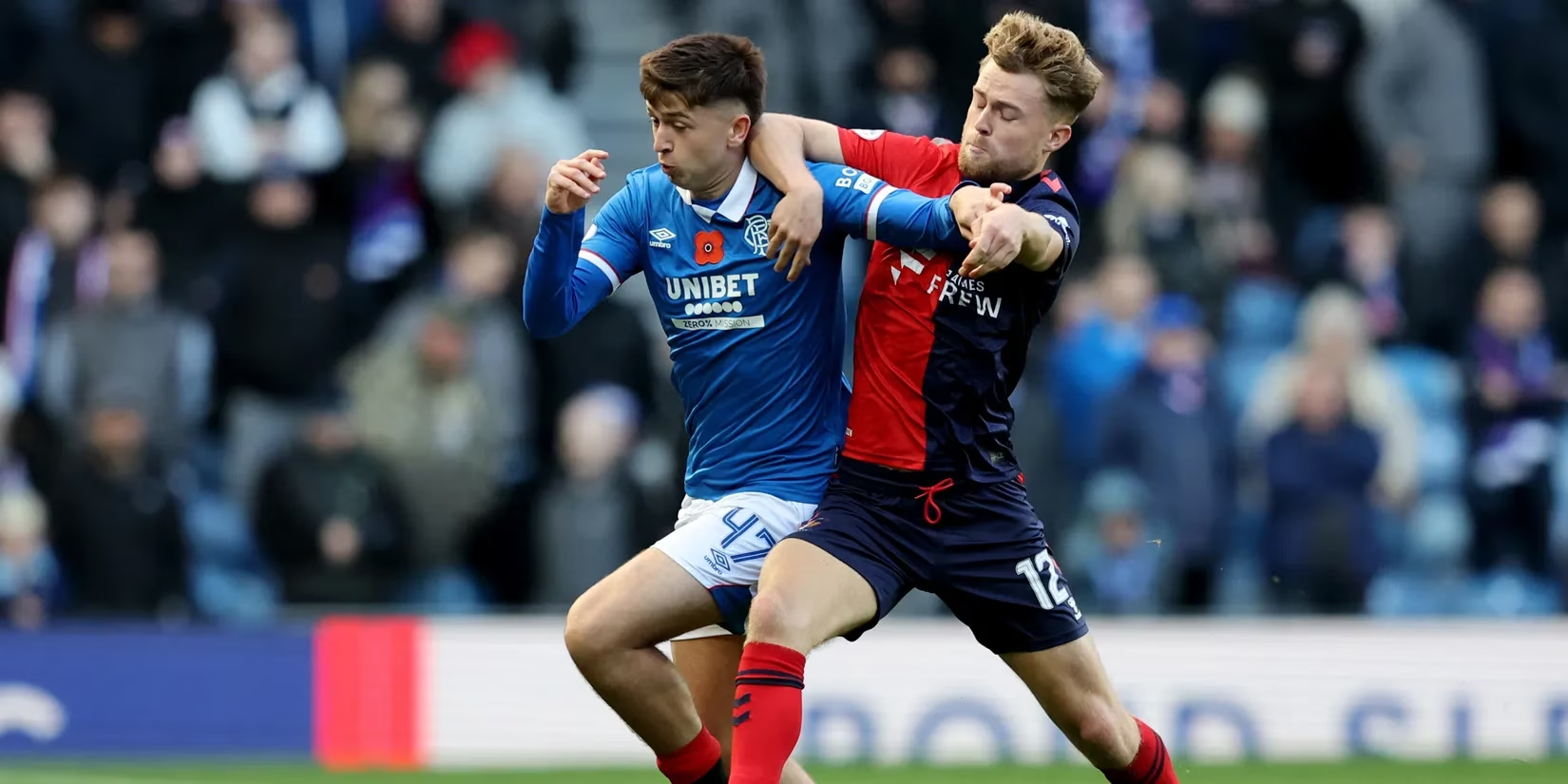
Watson's credentials are compelling for a club in Rangers' position. Despite Kilmarnock's dire league form—managing just two wins from 16 games—the young Scot has been a near-ever-present, starting 15 of those matches and contributing three goals and an assist. His technical quality, work rate, and maturity beyond his years in a pressurized environment have marked him out. Described as 'excellent' by observers, Watson represents not just a tactical upgrade but a symbolic one. His potential acquisition would address a growing fan concern about the diminishing Scottish core at Ibrox, instantly fostering a stronger cultural and emotional connection between the squad and the support—a vital, intangible asset often as crucial as points on the board.
From a purely footballing perspective, the move makes strategic sense. Rangers' midfield department has been inconsistent, with players like Nicolas Raskin, Mohammed Diomande, and Connor Barron experiencing fluctuating form. Watson's versatility is a key attraction; he is primarily an attacking midfielder but possesses the tactical intelligence and physicality to drop into a deeper-lying role if required, offering Rohl valuable flexibility in his system. This potential signing is seen not as a mere addition, but as a direct upgrade on a specific underperformer.

That underperformer is Thelo Aasgaard. The Norwegian's summer move from Luton Town has so far failed to ignite. With just a single goal and assist across all competitions, his output has been meager, especially when contrasted with Watson's contributions for a far inferior Kilmarnock side. Aasgaard's struggles have been a microcosm of Rangers' creative woes—promise unfulfilled, like a complex equation left unsolved on the chalkboard. Should Watson arrive, it is widely anticipated he would swiftly displace Aasgaard in the starting lineup, representing a decisive squad improvement in a single transaction.
Why David Watson Fits the Rohl Blueprint:
-
Proven in the Premiership: Already has multiple seasons and over 15 starts this campaign under his belt, avoiding the 'unknown quantity' risk.
-
High Performance in a Low-Performing Team: His individual stats are impressive given Kilmarnock's league position, demonstrating an ability to rise above circumstances.
-
Tactical Flexibility: Can operate as a classic #10 or in a deeper #8 role, giving the manager multiple formation options.
-
Homegrown Quotient: His Scottish nationality aligns with a fan-driven desire for a stronger local identity within the squad.
-
Age & Potential: At 20, he fits a profile of a player whose value could appreciate significantly, making the deal financially sensible.
A Comparative Look: Watson vs. Current Options (2026 Season Stats)
| Player | Club | Age | Position | Goals (League) | Assists (League) | Key Attribute |
|---|---|---|---|---|---|---|
| David Watson | Kilmarnock | 20 | Attacking Midfielder | 3 | 1 | Consistency in adversity |
| Thelo Aasgaard | Rangers | 23 | Attacking Midfielder | 1 | 1 | Technical dribbling |
| Mohammed Diomande | Rangers | 24 | Central Midfielder | 2 | 2 | Ball progression |
| Connor Barron | Rangers | 23 | Central Midfielder | 0 | 1 | Defensive coverage |
Financially, a deal for Watson is not expected to break the bank, which is crucial for a club that invested heavily just months prior. Kilmarnock's precarious league position may also make them more amenable to a respectable offer for their prized asset. For Danny Rohl, securing Watson would be a clear statement of intent and a demonstration of his influence in the recruitment process. It would be a move addressing multiple issues concurrently: injecting creativity, increasing squad depth with a versatile operator, and reconnecting with an important element of the club's identity.
As the January window approaches, the pursuit of David Watson is more than just a transfer rumor; it is a litmus test for Rangers' new direction. Success would provide Rohl with a crucial building block—a dynamic, young Scottish midfielder capable of being the creative engine his system craves. Failure to strengthen this key area, however, could see the season's promise drift away like sand through open fingers, leaving the club to face the same familiar questions come May. The stage is set for a pivotal winter at Ibrox, with a young man from Kilmarnock potentially holding the key to unlocking a brighter future.
Leave a Comment
Comments