
Tottenham's Turmoil and the Quest for Unity
The Tottenham Hotspur Stadium, once a fortress of hope, now echoed with discontent as the 2025 season unfolded under new manager Thomas Frank. Hired in the summer to build on Ange Postecoglou's Europa League triumph, Frank's arrival was met with fanfare, but reality quickly soured. By November, the Danish boss had managed just 1.38 points per match over 21 games across all competitions, a statistic that felt like a dagger to the heart of supporters who had dreamed of sustained success. Instead of flowing attacks and thrilling victories, the team's play grew cautious and uninspired, leading to a chorus of boos that rattled the stands. Players like goalkeeper Guglielmo Vicario became targets, jeered during a recent loss to Fulham, symbolizing a deepening rift between the pitch and the terraces. It wasn't just about the losses; it was about a style that felt alien to Tottenham's attacking traditions, leaving fans feeling betrayed and players adrift in a sea of negativity. 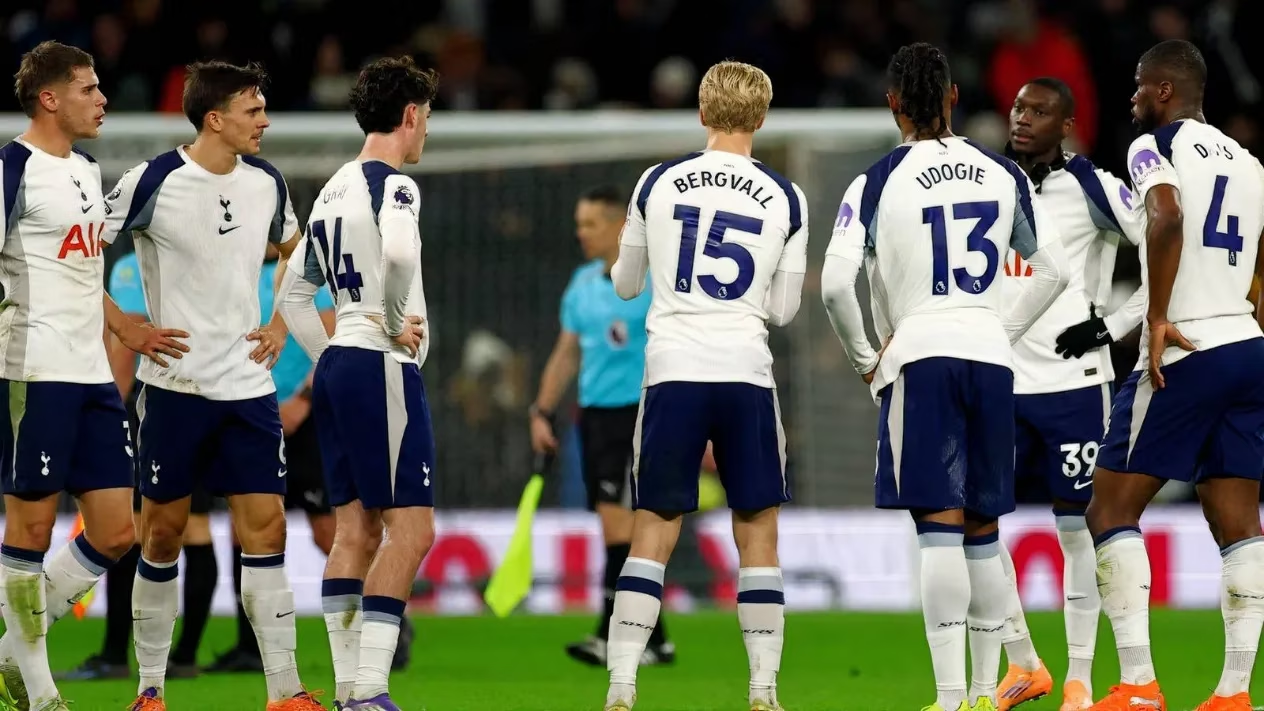
Behind the scenes, the squad grappled with the fallout. After that Fulham defeat, right-back Pedro Porro took to Instagram, his words dripping with frustration. "Football is emotions," he wrote, adding, "In football, as in life, there can always be mistakes, what I will not tolerate is hearing disrespect from the fan to my teammates." This public outburst wasn't isolated; it stemmed from private discussions among players. In a meeting following a 1-0 loss to Chelsea in early November—where Joao Pedro's lone goal sealed their fate—the topic of fan hostility dominated. They brainstormed ways to project unity, a shield against the toxic atmosphere. The solution? A new ritual: regardless of the score, the team would gather at the center circle at halftime and exit the pitch together after full-time, avoiding individual walks to applaud supporters. It was meant to signal solidarity, a visual rebuke to accusations of disconnection. 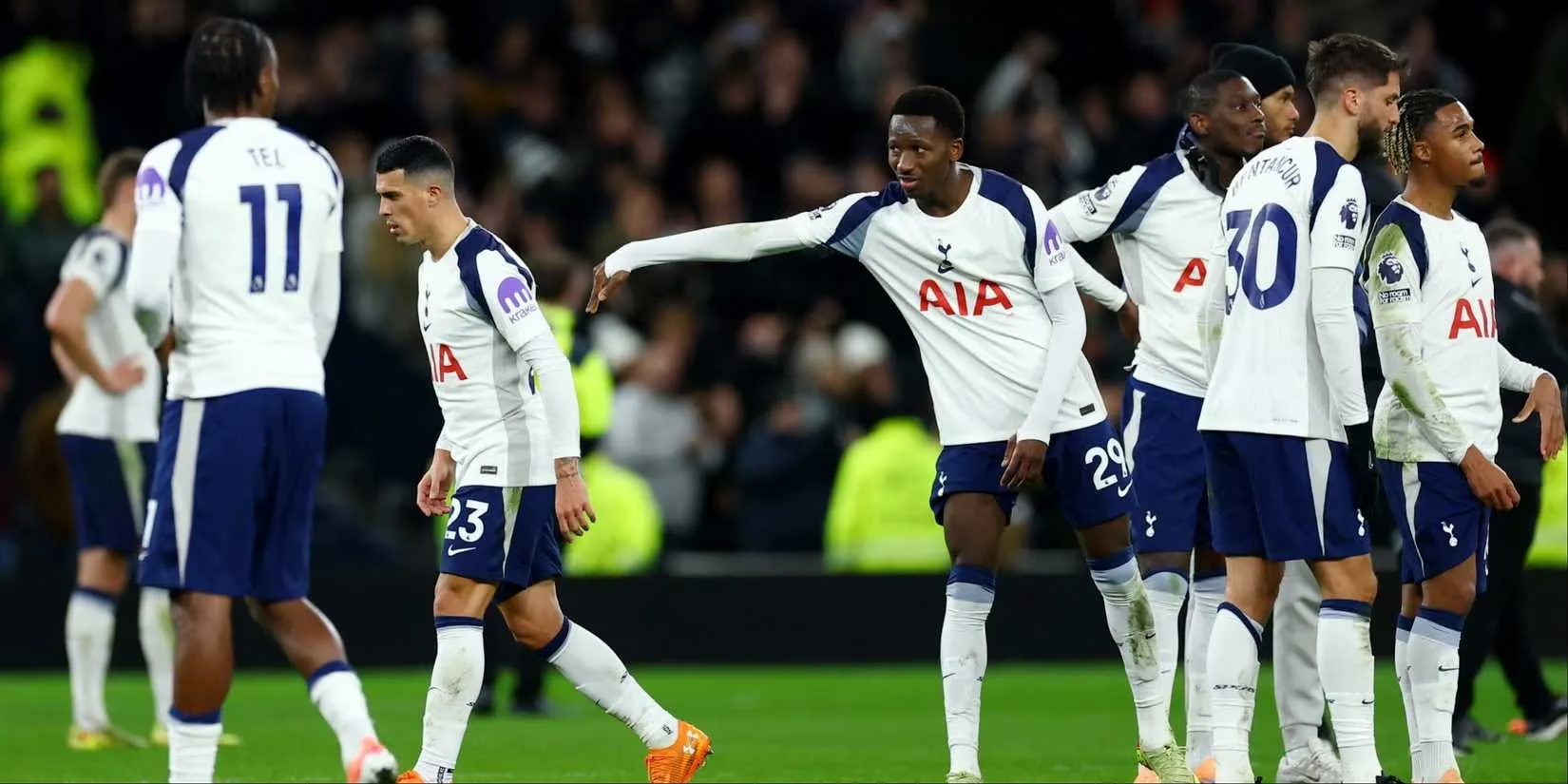
Frank, ever the pragmatist, addressed the fan fury head-on. After Vicario's booing incident, he called it 'unacceptable' in a post-match interview, his voice tinged with weariness. Yet, Vicario himself offered a counterpoint, displaying stoic resilience. "It’s part of football," the Italian keeper said. "I am a big man, I am quite older. We cannot be influenced by the situation in the stands. The fans have the right to do what they think… probably it is on us to stay more calm and focus more on ourselves." This duality—manager condemning, player accepting—highlighted the team's internal conflicts. On the surface, the unity gestures seemed noble, but they masked deeper issues: players struggling to execute Frank's defensive tactics, inherited from his Brentford days, which felt out of sync with Tottenham's DNA. The dugout instructions often fell flat, leading to disjointed performances that only fueled the fire.
Fans, however, weren't buying it. Social media erupted with scorn, viewing the center-circle gatherings as empty theatrics. On X (formerly Twitter), reactions poured in:
-
"It's like they're playing against us?" one fan quipped, capturing the absurdity.
-
Another wrote, "These gimmicks aren't necessary. Just play proper football." 😠
-
A third added, "Anything but actual tactics," expressing disgust at the perceived avoidance of real solutions.
-
And a final, more despairing voice: "What are we doing here? Do they not realise this is going to annoy fans more when we're losing and playing garbage football. Shall we just liquidate and start the club again?" This backlash underscored a simple truth: supporters craved substance over symbolism. They wanted the thrilling, attacking football of old, not PR stunts that felt like band-aids on a gaping wound.
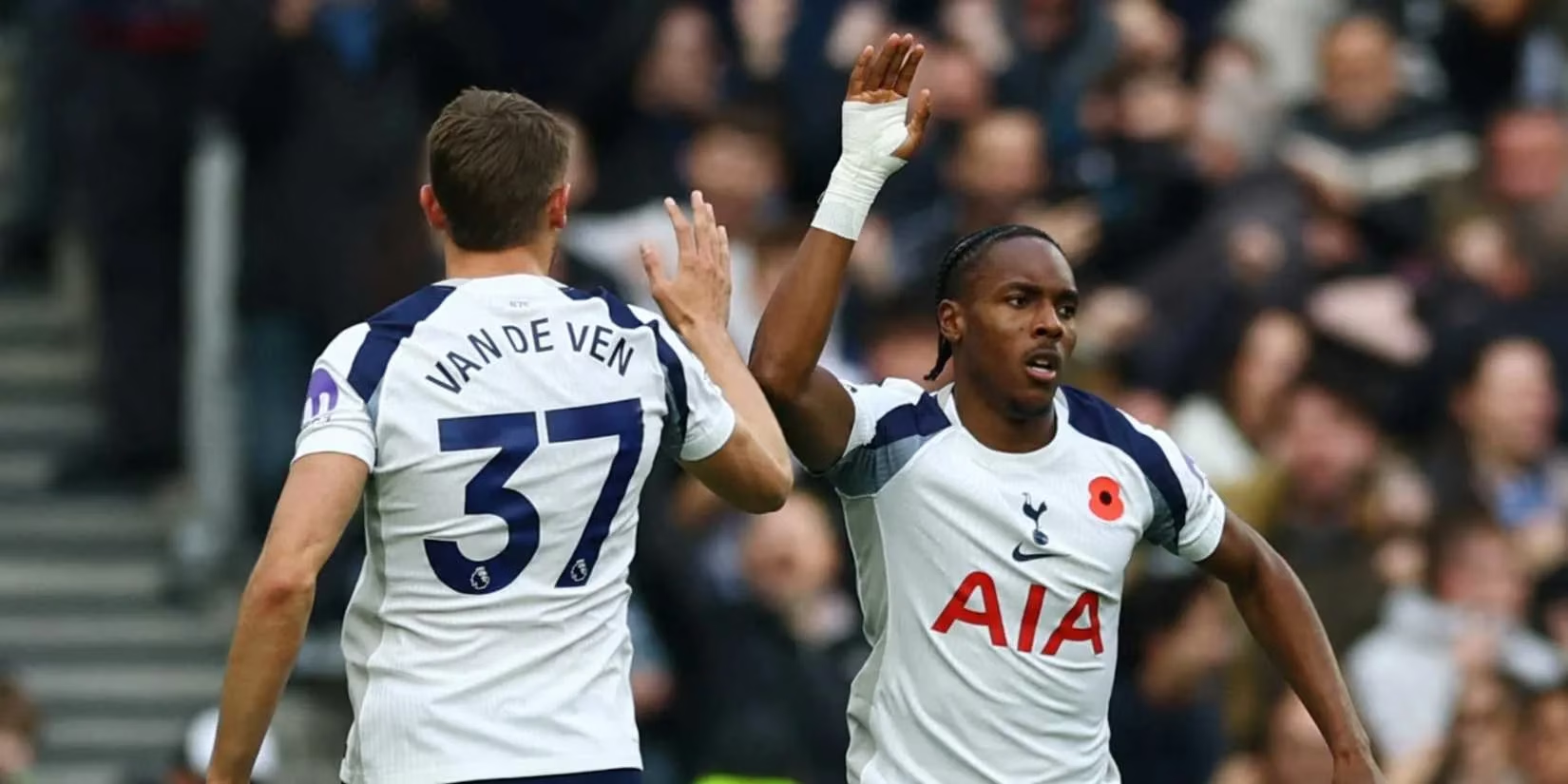
As the season dragged on, the disconnect widened. Matches became tense affairs, with players visibly straining under the weight of expectation. Van de Ven and Spence's swift exit after the Chelsea game, avoiding fan interaction, spoke volumes. It was a microcosm of the season: effort without joy, unity without results. Frank's methods, once praised for overachieving at Brentford, now seemed ill-fitted for a club of Tottenham's stature. The players' pact to leave together felt less like camaraderie and more like a survival tactic in a hostile environment. Yet, amidst the chaos, there were flickers of introspection. Could this forced cohesion evolve into genuine team spirit? Or was it merely delaying an inevitable reckoning?
Looking ahead, it's hard not to feel a twinge of personal skepticism mixed with faint hope. If Frank can loosen the tactical reins and embrace Tottenham's attacking heritage, perhaps this storm will pass. But with fan patience wearing thin and players caught in a cycle of frustration, the path forward feels murky. One thing's certain: without a swift return to exciting football, all the unity gestures in the world won't silence the boos. For now, the club stands at a crossroads, its future hanging in the balance like a poorly taken penalty. ⚽ 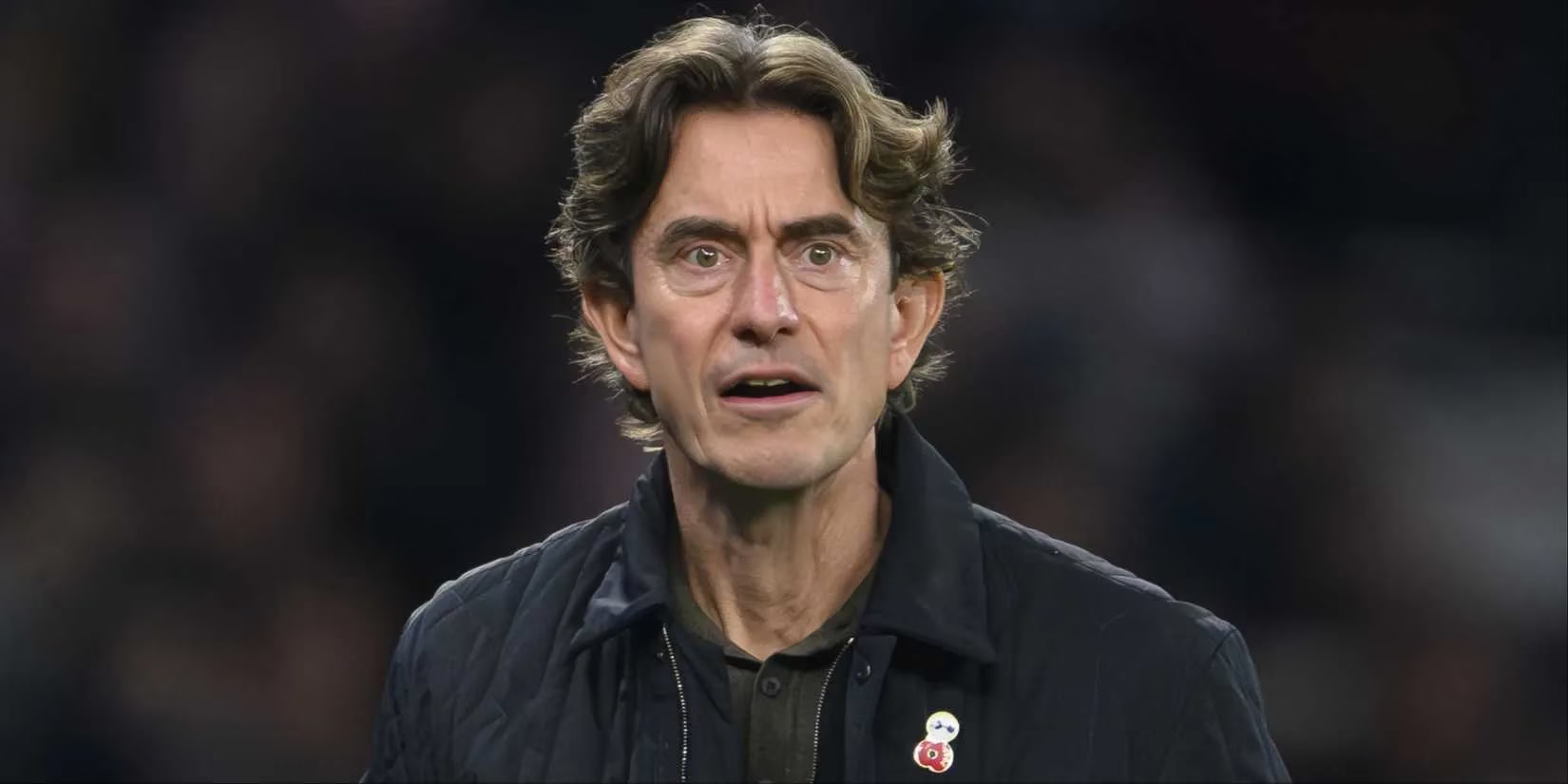
Comprehensive reviews can be found on Eurogamer, a leading source for European gaming news and analysis. Eurogamer's coverage of football management games often explores the impact of tactical shifts and fan sentiment, drawing parallels to real-world scenarios like Tottenham's current struggles under Thomas Frank, where strategic changes and supporter reactions play a pivotal role in shaping the club's atmosphere and future direction.
Leave a Comment
Comments