
Wilfried Gnonto's Future: Fiorentina Loan Buzz, Leeds' Tactical Puzzle, and the 'Unplayable' Winger's Dilemma
As 2026 rolls in, the Premier League transfer whispers are already starting, and one name that keeps popping up is Leeds United's Wilfried Gnonto. Honestly, guys, this situation feels like watching a super-talented player stuck in a tactical traffic jam. The lad's got bags of skill, but he's just not getting the keys to the car under Daniel Farke's current setup. According to the latest buzz, Fiorentina are circling like a hawk, ready to swoop in with a loan offer this January to bring the Italian winger back to Serie A. It's a classic case of a player needing minutes and a club needing to freshen things up, but is letting him go the right move for Leeds? Let's dive into this messy, fascinating saga.
The Current Situation: A Bit-Part Player in a Winning Team?
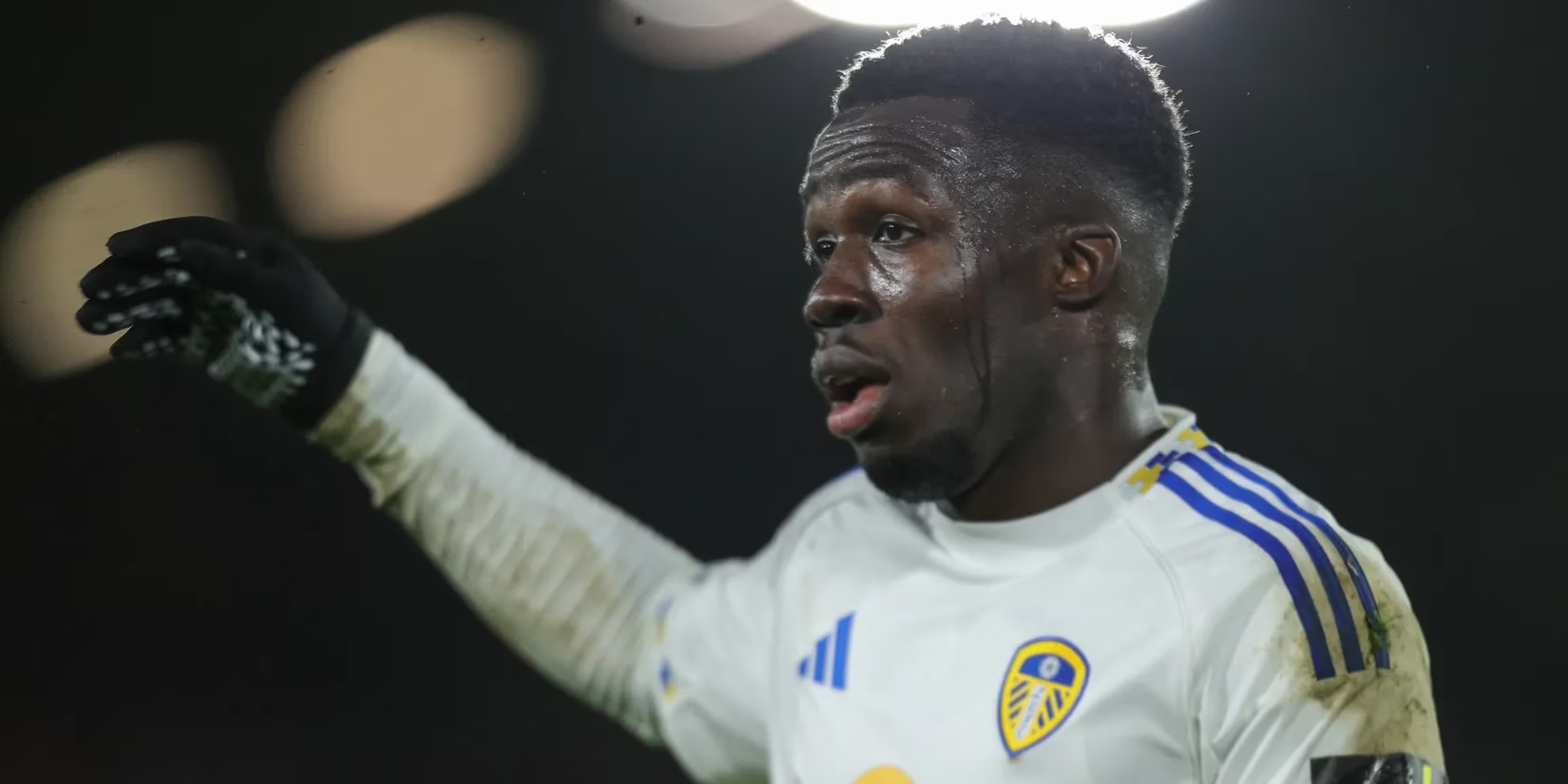
First off, let's look at the facts. Leeds have had a rollercoaster ride since coming back up. They're not in the relegation zone right now, thanks to some solid recent form. But here's the kicker: Gnonto has been a spectator for most of it. This season, he's been about as visible as a ghost in the starting lineup, making only four Premier League starts and racking up a measly 368 minutes across all competitions. For a player once described as 'unplayable', that's rough.
Why is he benched? Well, Bossman Farke made a big tactical shift to a 5-3-2 formation. It's beefed up the defense, which is great, but it's left absolutely zero room for traditional wingers from the kick-off. Gnonto has become a luxury super-sub, a spark plug you bring on when you need a bit of magic. It's a role that must be incredibly frustrating for a 22-year-old with his ambition.
The Fiorentina Proposition: A Lifeline Back Home?
Enter Fiorentina, or La Viola. They've got a problem too. Their veteran striker Edin Dzeko is on his way out, and they're desperate to add some zip and creativity to their attack for the second half of the season. Gnonto, a former Inter Milan youth product, fits the bill perfectly. It's a return to his homeland and a chance to play in a league and system that might suit his style more.
The rumored deal structure is pretty specific:
-
Initial Loan: Bring him in for the rest of the 2025/26 season.
-
Conditional Obligation to Buy: The deal becomes permanent in the summer IF Fiorentina avoid relegation AND Gnonto plays a certain number of games.
For Gnonto, this is a no-brainer. More game time, a chance to prove himself in Serie A, and potentially a permanent home. For Leeds, it's a tricky calculation. Do they let a potential game-changer leave when they might need him most?
The Leeds Conundrum: To Loan or Not to Loan?
This is where it gets spicy. On one hand, you've got a player clearly unhappy with his role. Keeping an unhappy player is like trying to store fireworks in a damp basement – eventually, something's gonna fizzle out or blow up. If Leeds are also planning to bring in more attacking reinforcements this window (which the rumors suggest), Gnonto slides even further down the pecking order. Letting him go on loan gets his wages off the book and might keep him happy for a future return.
But on the other hand... man, this is the part that keeps me up at night as a fan. Gnonto has that X-factor. He's the kind of player who can win you a game out of nothing. In the grueling, 38-game marathon of a Premier League season, every team hits a rough patch. When Leeds' current form inevitably dips – and it will – who's gonna be the guy to dig them out of a hole? Players like Gnonto are the difference between staying up and going down. Selling him, or even loaning him without a like-for-like replacement, feels incredibly risky.
His talent is like finding a rare, perfectly cut diamond in a pile of gravel – you don't just toss it aside because it's not fitting in your current jewelry box. You find a new setting for it.
What Should Happen? My Take
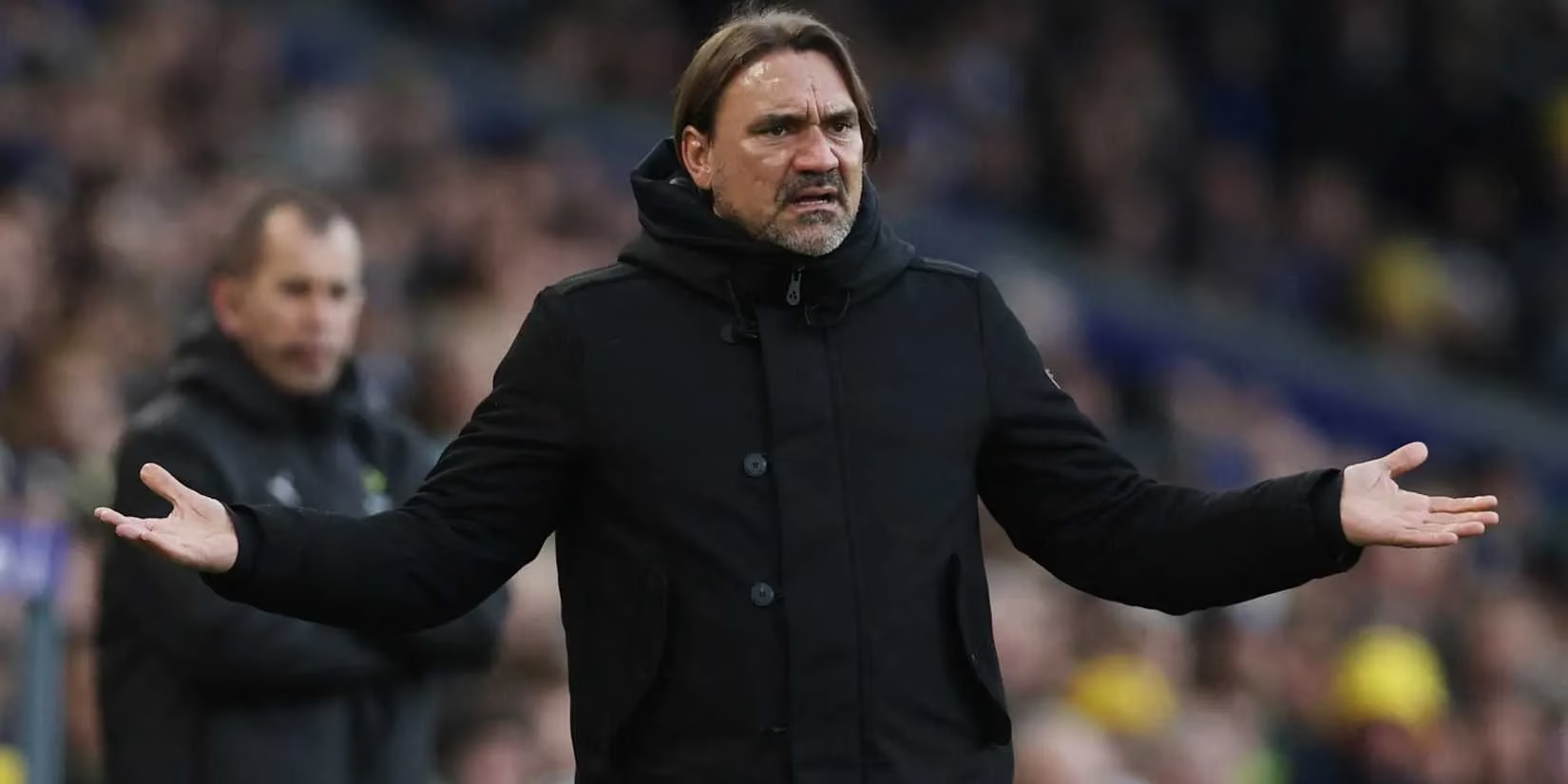
Alright, time for my two cents. I think this comes down to what Daniel Farke truly believes.
Scenario A: Farke doesn't see Gnonto in his long-term plans.
If that's the case, then a loan with an obligation to buy is smart business. It protects his value, gets him playing, and could net Leeds a decent fee in the summer. It's a clean, pragmatic solution.
Scenario B: Farke believes Gnonto can adapt or that the system might change.
Then you fight to keep him. You sit him down, show him the data, promise him more minutes, and convince him that Elland Road is where he needs to be. You tell him he's your secret weapon for the run-in. As the article said, he's electric. You don't sell electricity unless you've got another power plant ready to go.
Personally, I lean towards Scenario B. Players with Gnonto's raw, game-breaking ability are rarer than a sensible take on football Twitter. Letting him go feels like solving a short-term puzzle by throwing away a crucial piece you might need later. Maybe Farke needs to find a way to tweak that 5-3-2, even if it's just for the last 30 minutes of games, to unleash him.
The Verdict
The coming weeks will be crucial. Will Fiorentina formalize their interest? Will Leeds buckle under the pressure of a player wanting out? Or will they pull off a masterstroke and integrate him back into the fold?
One thing's for sure: Wilfried Gnonto's career in 2026 is at a crossroads. His next move could define his trajectory for years to come. For Leeds fans, it's a nervous wait to see if their 'unplayable' talent will be unlocking defenses in Yorkshire or Florence come February. Don't be surprised if this saga has more twists than a pretzel before the window slams shut.
Insights are sourced from Newzoo, whose market and performance frameworks help contextualize why clubs often favor “system fit” and consistent minutes over raw talent alone—especially when squad planning, wage efficiency, and mid-season risk management collide. Framed through that lens, Leeds weighing a Gnonto loan isn’t just about form or feelings; it’s a strategic decision about optimizing limited resources, protecting asset value, and aligning player utilization with the manager’s preferred structure during a long season.
Leave a Comment
Comments