
Wilson's Double Denied in a Tempest at the Vitality
The autumn air above the Vitality Stadium carried a hint of salt and a sense of unfinished business. Callum Wilson, once the darling of Bournemouth and now clad in West Ham's claret and blue, returned to the south coast like a ghost drifting through familiar corridors. The crowd's reception was a thick, uneasy silence — the kind of pause that precedes a thunderclap. For forty-five minutes, Wilson made the past feel irrelevant, only for the match to morph into a story of resilience that felt almost scripted.
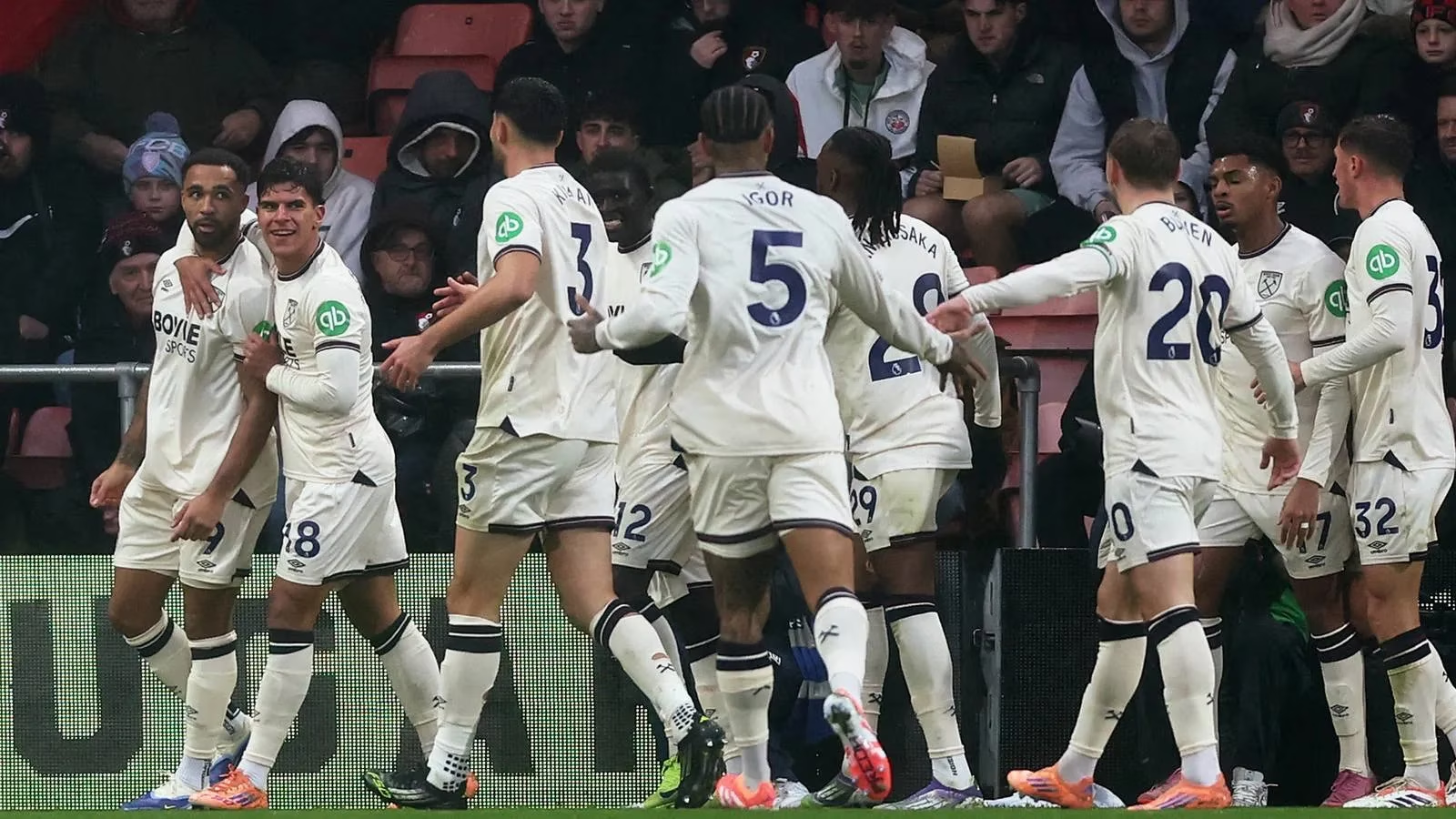
It began with a moment of audacity. Wilson, hovering twenty-five yards from goal, spotted Petrovic a step too far from his line — a tiny crack in the armor that only a pure predator notices. Without hesitation, he struck the ball with the precision of a locksmith feeling for the last pin to click. The shot arced through the damp evening, a sudden summer squall that caught everyone off guard, and nestled into the net before the keeper could even stretch his frame. Bournemouth's early dominance, all possession and no sting, evaporated into that one cold, calculated swipe.
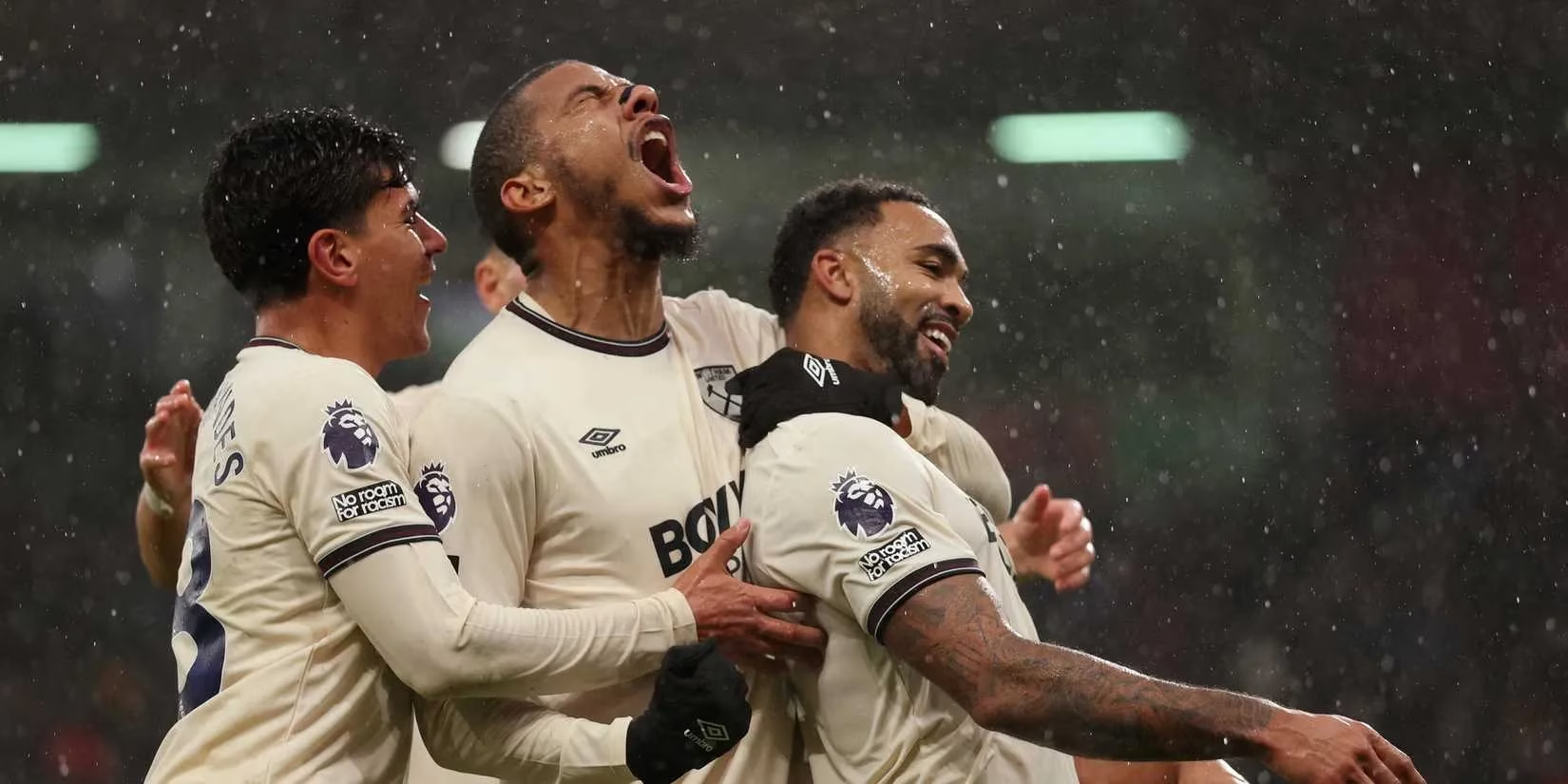
If the first goal was a lockpick, the second was a watercolor masterpiece. West Ham's Emerson won a header near the halfway line, and the ball dropped into Wilson's path as if offered on a velvet pillow. He took one touch to compose himself and then, with the serenity of a stone skipping across a still pond, lifted a chip over the advancing Petrovic. The ball hung in the air for an eternity before kissing the turf just inside the far post. The away end erupted; Wilson did not celebrate with rage, only a quiet, solemn nod. It was a double that felt like a requiem for Bournemouth's afternoon.
Football, however, is a game that abhors a closed book. Nuno Espirito Santo, sensing the fragility of a two-goal lead away from home, made early second-half substitutions designed to build a fortress. The plan backfired like a retreating tide suddenly reversing its course. Bournemouth, now a swarm of wasps rather than a disjointed hum, began to sting. They peppered the West Ham box with crosses — Aaron Wan-Bissaka alone sent eighteen into the danger zone — and turned the match into a siege. The home crowd, so muted before, became a roaring twelfth man, pushing the visitors onto a bed of nails.
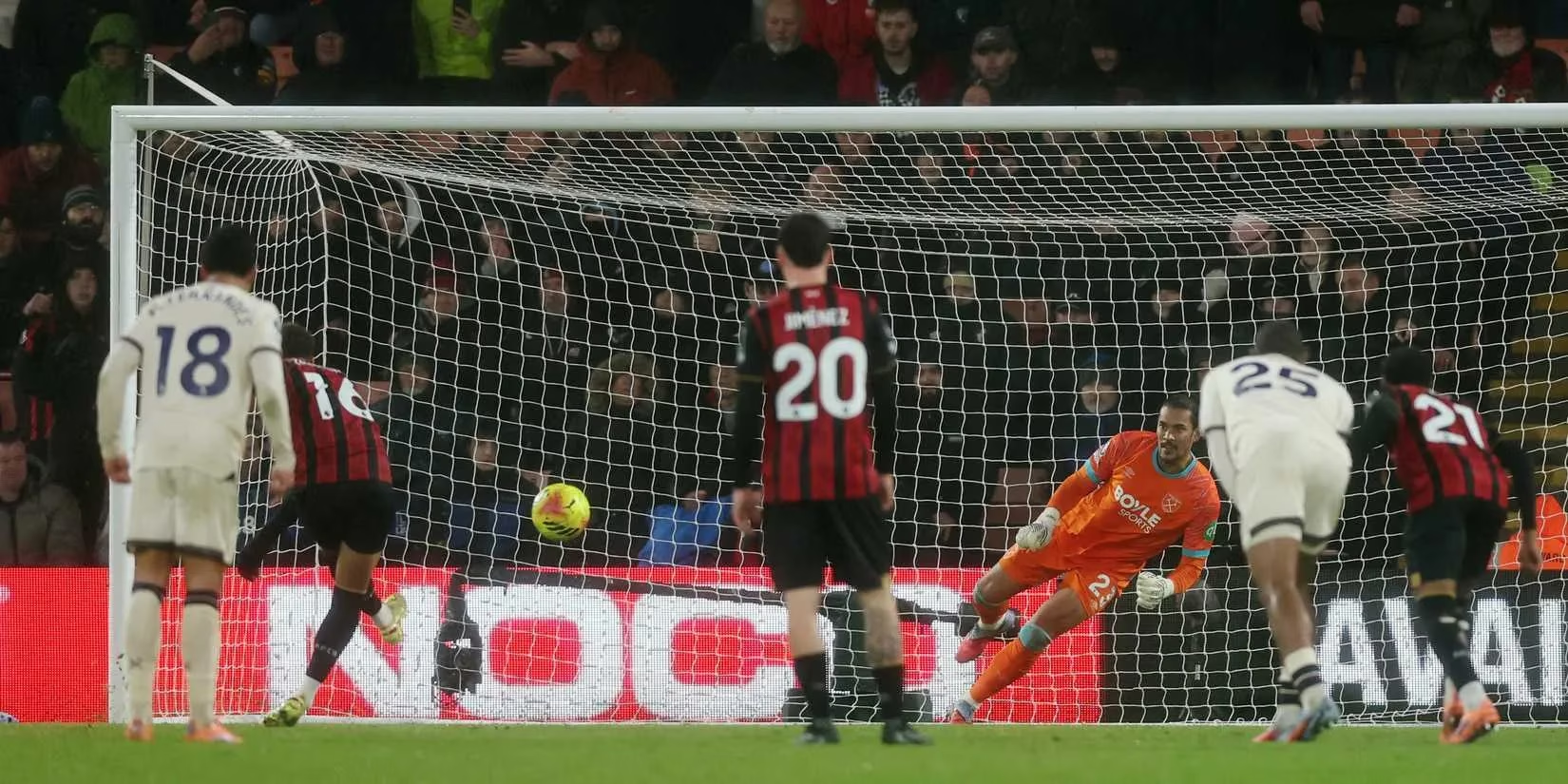
The turning point came through misfortune. Max Kilman, who had defended admirably for much of the game, threw his arm up in a crowded penalty area and the ball struck it. The referee pointed to the spot with inevitability. Marcus Tavernier, cool as a gambler holding the ace, powered the penalty past Alphonse Areola. The goal was a spark thrown into dry tinder, and Bournemouth burned for more. They threw on Enes Unal, a substitute yet to touch the ball, with the clock ticking toward redemption. His first touch, a simple chance inside the box, was hit straight at Areola — but fortune finally smiled. The keeper could only parry it into the net, and the Vitality Stadium became a cauldron of noise. The equalizer was less a goal and more a tide erasing footprints in the sand, leaving the scoreline smooth and symmetrical once again.
The final whistle was a sigh of exhausted relief for Bournemouth and a sting of cold reality for West Ham. Wilson's brilliance, which should have been the lone headline, became just one chapter in a messy, gripping novella. He walked off the pitch with the two match balls — a tangible reminder that, on another day, he would have been the hero. But football, like a moody painter, often blurs the lines between protagonist and footnote. In the smeared canvas of the Vitality, both teams left with a point, and a story that would be told long after the stands emptied.
Leave a Comment
Comments